Holiday Light Installation in Utah: What Professional Service Provides
Why Homeowners Make the Switch to Professional Installation
The shift from DIY holiday light installation to professional service typically follows one of three experiences: working on a ladder in November conditions and realizing the safety risk of combining icy surfaces with roofline height, completing an installation that looks significantly less polished than intended, or calculating the actual hours the project requires over two or three years and deciding the time has better uses.
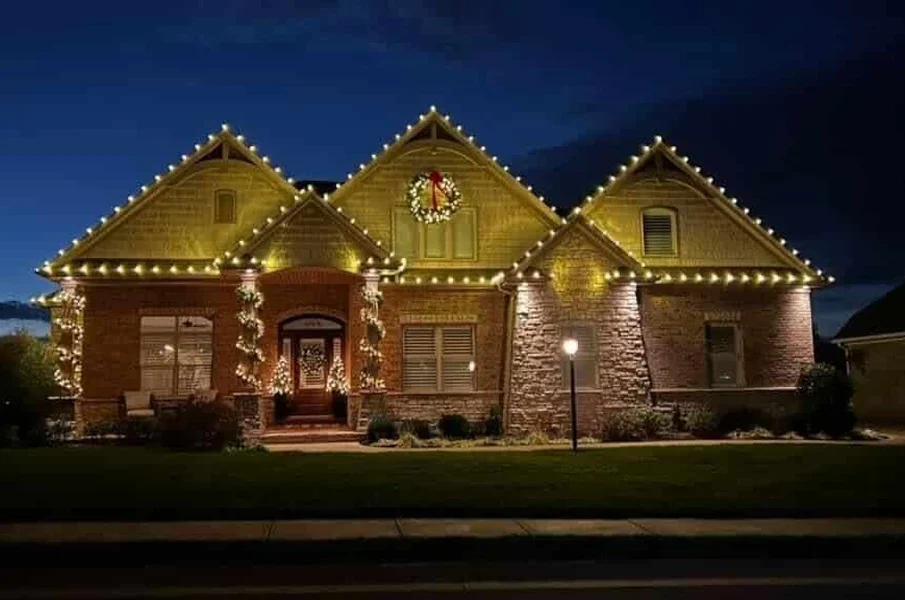
Professional holiday light installation eliminates all three problems. Trained crews with proper equipment work safely on rooflines and in conditions that are unsafe for homeowners with extension ladders. The finished product consistently looks more polished because the crew has installed hundreds of similar homes and knows the sequencing, attachment methods, and layout decisions that produce a clean result. The homeowner’s time investment reduces to the initial consultation and letting the crew in when they arrive.
The service extends to takedown and storage at the end of the season. Lights taken down professionally and stored correctly survive multiple seasons at a quality level that hastily removed and poorly stored lights do not. The lights the professional crew installs are the crew’s equipment, maintained by the crew, and available at the start of each season without the homeowner having to inventory and assess the condition of self-purchased lights.
What to Expect from the Service
Professional holiday light installation Utah services begin with a design consultation – confirming the scope of what will be illuminated (roofline, trees, bushes, specific architectural features), the style of lights (warm white, cool white, multicolor, specific configurations), and the timing of installation and removal. Some services offer a standard package for specific home configurations; others customize fully to the homeowner’s preferences.
LED versus traditional incandescent is a choice that professional services typically handle by default with LED – lower energy consumption, lower heat output (reducing fire risk and damage to foliage on trees and bushes), longer operating life, and comparable or better visual quality compared to incandescent at the price points where modern LED holiday lights operate. Homeowners who prefer a specific traditional warm incandescent look can often request it specifically; the default is typically LED.
The seasonal timing of professional installation is earlier than most homeowners expect. Companies begin installing in October for homeowners who want availability guarantees; November installations are still accessible but with less flexibility on exact dates; December availability is constrained for all but pre-scheduled clients.
Energy Star efficiency standards for LED holiday lights confirm that certified products meet the brightness, color consistency, and energy consumption specifications claimed – relevant for the extended operating periods that holiday light displays involve.
Takedown, Storage, and Year-Over-Year Planning
Takedown at the end of the season is included in professional service and happens on a schedule that the homeowner confirms rather than manages. The lights are removed, tested, repaired or replaced as needed, and stored in proper containers – extending the life of the display equipment across multiple seasons. This is the maintenance component that most distinguishes professional service from homeowner-managed installation over multiple years.
Year-over-year planning with the same service company builds a relationship where the crew knows the property, knows the installation sequence, and can execute more efficiently than a first-year installation requires. Many professional holiday lighting clients report that second and subsequent years feel significantly smoother than the first installation because the established relationship eliminates the planning conversations that the first year requires.
About Author