
Should New Windows Go Into the Old Frames?
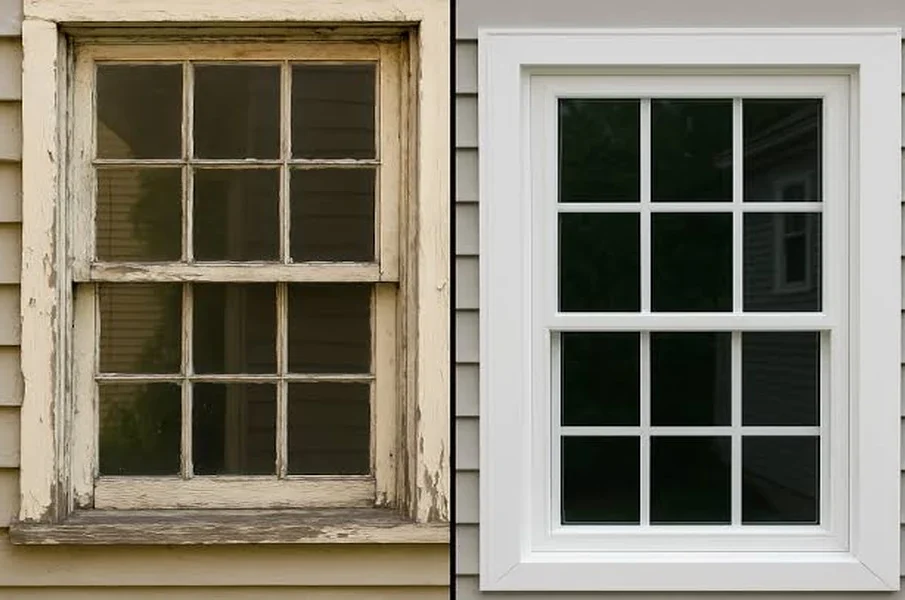
Every replacement window project starts with a decision most homeowners don’t know they’re making. When old windows come out, the installer can either slide new units into the existing frames or tear everything out down to the rough wall opening and start over. The first approach is called an insert or pocket installation. The second is a full frame replacement. Both are common, both have loyal defenders, and the right choice depends far more on what is hiding inside your walls than on the windows you pick from a brochure.
The difference matters because a window is more than glass and sash. Around every unit is a frame, and around that frame is trim, flashing, insulation and the wood framing of the house itself. An insert installation leaves most of that system in place. A full frame job exposes it, which means problems get found and fixed, but also that the project grows in time, cost and disruption.
Homeowners weighing window replacement in Alberton and across the surrounding communities of Northeast Georgia often find that a careful look at the existing frames settles the question before any product is chosen. A team that installs double hung, casement, sliding and bow windows, along with doors and siding, can see the whole wall and tell whether the old frame should stay or be removed.
How an Insert Installation Works
With an insert, the installer removes the old sashes, the parts that hold the glass and move, along with the stops and balance hardware. The original frame, interior trim and exterior casing stay where they are. A new window, built slightly smaller to fit inside that frame, is set in, shimmed, fastened, insulated around the edges and sealed.
The appeal is obvious. Interior walls are not disturbed, so plaster and drywall stay intact. Original trim, which in some older homes is detailed millwork that would be expensive to reproduce, survives untouched. A crew can often finish several openings in a day, and the house stays livable throughout.
There is a tradeoff people rarely hear about until the job is done. Because the new unit sits inside the old frame, the glass area shrinks. The new frame adds its own width on every side, so you might lose an inch or more of visible glass all the way around. On a large window, that barely registers. On a narrow window in an older home, it can noticeably reduce daylight and change how the opening looks from the street.
What a Full Frame Replacement Changes
A full frame replacement removes everything down to the rough opening: sashes, frame, interior trim and often the exterior casing or a strip of siding. The new window is installed directly against the house framing, flashed into the wall’s weather barrier and finished with new trim inside and out.
This method costs more and takes longer, but it gives you three things an insert cannot. You get the full glass size the opening allows. You get to inspect and repair the framing around the window. And you get proper flashing tied into the wall, which matters a great deal on walls that take heavy rain.
That last point deserves attention in Georgia. Heavy downpours, summer thunderstorms and high humidity give water plenty of chances to work its way behind trim. An insert can only be as watertight as the old frame it sits in. If that frame has already let water into the wall for years, a new insert simply covers the problem.
Testing Your Frames Before Anyone Quotes
You can learn a lot in about fifteen minutes with a flashlight, a screwdriver and some patience. Go through this sequence on each window, paying the closest attention to windows on the sides of the house that get the most rain:
- Press the tip of a screwdriver into the bottom of the frame and the sill, both inside and out. Sound wood resists. Rotted wood feels soft or spongy and lets the tip sink in.
- Look at the corners where the sill meets the side jambs. Dark stains, peeling paint and swollen joints there usually mean water has been sitting in the wood.
- Check the drywall or plaster under each window for faint stains, bubbling paint or a soft spot. Water that gets past the frame often shows up here first.
- Hold a level against the side jambs and lay it across the sill. A frame that has shifted out of square can’t support a new insert properly.
- On a breezy day, move your hand slowly around the trim. Drafts coming from the trim rather than the sash point to gaps between the frame and the wall framing.
If every window passes, an insert is usually a sound, economical choice. If several fail, especially on steps one through three, plan on full frame replacement for those openings, at least. Many homes end up with a mix: inserts where the frames are healthy and full frame work where they aren’t.
Older Homes Bring an Added Layer
If your house was built before 1978, there’s a good chance the original window frames and trim were painted with lead paint at some point. Removing a window, whether for an insert or a full tear-out, disturbs those painted surfaces and can release fine dust. The EPA’s guidance for homeowners on lead-safe renovation recommends hiring a contractor who is certified and trained in lead-safe work practices for projects in older homes, and it explains how to find one.
In practice, this means an older home’s window project should come with containment, plastic sheeting, careful cleanup and a contractor who is certified to work around lead paint. It also gives inserts a small advantage in older homes with sound frames, because keeping the original frame and trim usually disturbs less paint than tearing everything out.
Weighing Cost Against Lifespan
Inserts generally cost less for each opening because they take less labor and need no new interior or exterior trim. That saving is real, but it only holds if the old frame has years of life left. If the frame starts rotting a few years after a new insert goes in, you end up paying for the work twice.
Full frame replacement costs more up front but resets the whole opening. New framing repairs where needed, new flashing, new insulation and new trim give the window a fresh start from the studs out. For homes planning new siding soon, the timing works well too, since the exterior around each window will be opened up anyway.
Reading What Your House Is Telling You
The best window decision usually isn’t the same for every opening in the house. A sheltered window under a deep porch roof may have a frame as sound as the day it was built, while the one on the exposed gable end has been taking rain for decades. Walk the house, test each frame and treat each opening on its own. When a contractor’s quote shows that same level of attention, with some openings marked for inserts and others for full frame work, it’s a good sign the recommendation came from actually inspecting your windows.
About Author